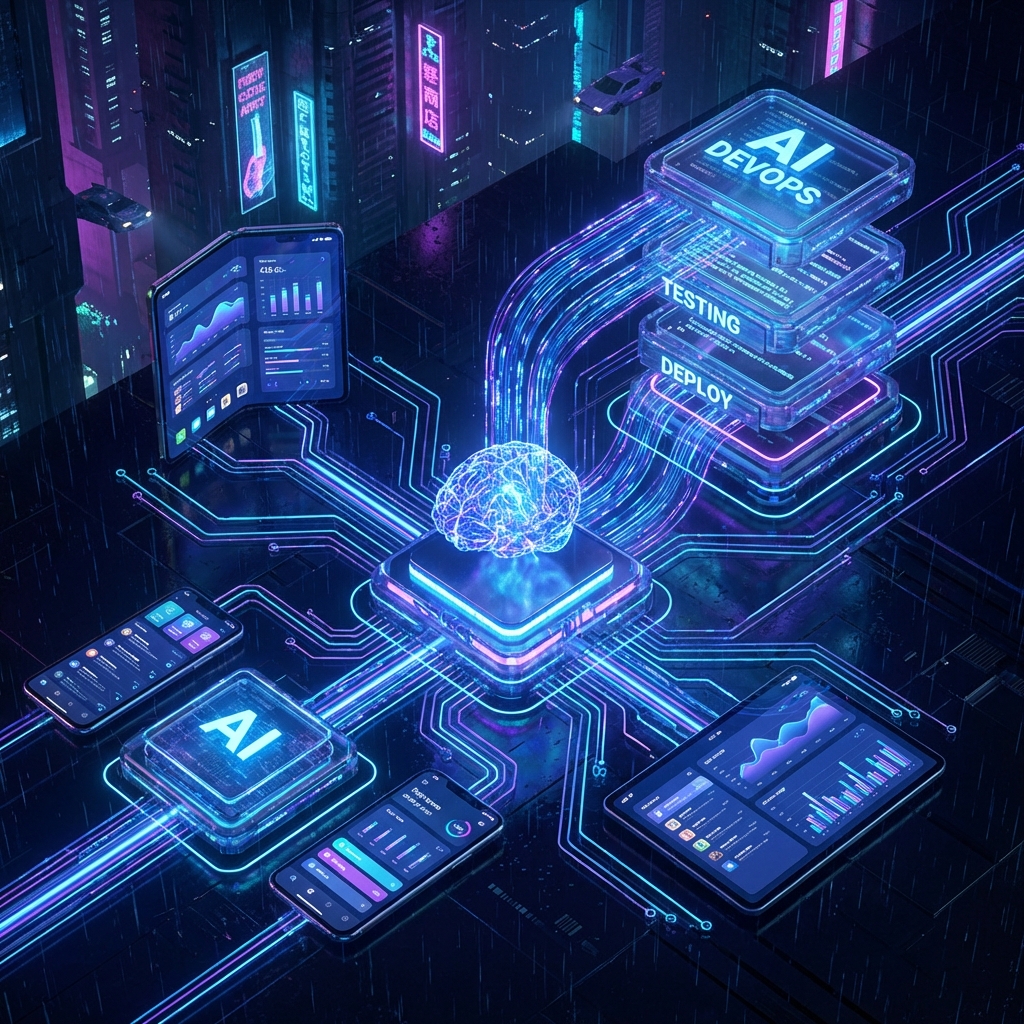
DevOps is evolving. It's no longer just about "Continuous Integration" and "Continuous Delivery"—it's about Continuous Intelligence. With the integration of AI, mobile pipelines are moving from automated scripts to autonomous agents.
The Current State: Scripted Fragility
Traditional mobile CI/CD pipelines (Jenkins, GitHub Actions, Bitrise) are powerful but "dumb." They execute exactly what they are told. If a UI test fails because a button moved 2 pixels, the build fails. If a provisioning profile expires, the deployment halts.
This fragility costs engineering teams thousands of hours per year. This is where AI steps in.
1. Predictive Build Failures
Imagine a pipeline that knows your build is going to fail before it compiles a single line of code. AI models trained on your project's historical build logs can analyze code changes (git diffs) and predict the probability of a build failure with over 90% accuracy.
- Early Warning: "This PR modifies core networking logic but doesn't include updated tests. Predicted failure rate: 85%."
- Resource Optimization: Stop expensive cloud builds before they waste credits on a doomed attempt.
2. Self-Healing Test Suites
Mobile UI testing (Appium, XCUITest, Espresso) is notoriously flaky. AI-driven test runners can now "see" the app like a human.
If a "Login" button changes its ID from #btn-login to #submit-auth, a traditional script crashes. An AI agent, however, analyzes the DOM structure and visual appearance, recognizes it's still the login button, and automatically updates the test script in real-time.
3. Intelligent Deployment Strategies
AI doesn't just build the app; it decides who gets it. By analyzing user telemetry and crash rates from previous releases, AI algorithms can orchestrate complex canary deployments:
Automated Canary Rollout Scenario:
1. Release to internal QA (0% risk).
2. Release to "Early Adopters" (top 5% most active users).
3. AI Alert: "Abnormal battery drain detected in v3.1.2 on iOS 18 devices."
4. Action: Automatic rollback for impacted users; pause rollout for others.
4. The Rise of "Code-to-Cloud" Agents
We are moving towards a future where a developer pushes code, and an AI agent handles the rest—not just running scripts, but making decisions.
Need to update the provisioning profile? The agent logs into the Apple Developer Portal and does it. Need to generate a changelog? The agent reads the commit messages, summarizes them into human-readable text, and translates them for different locales.
Conclusion: From DevOps to AIOps
The future of mobile DevOps isn't about writing better YAML configuration files. It's about training better models. Teams that embrace AIOps will ship faster, crash less, and sleep better.